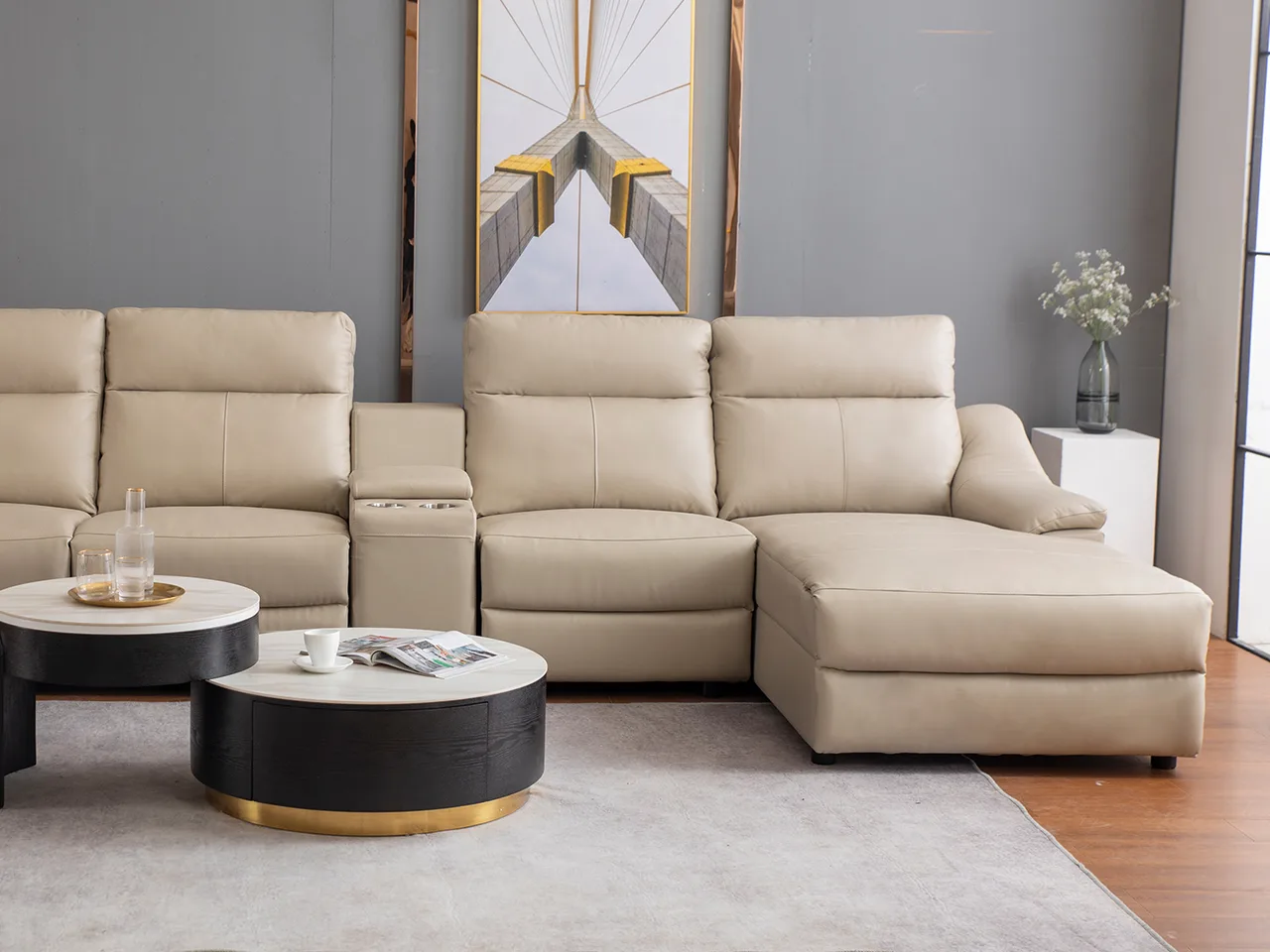
"Which cover is best — leather or fabric?" We get the question most weeks, and there is no clean answer, because best depends on your price point, your climate and who sits on the sofa. What we can do is tell you how each one ages and what it does to your cost, because that is what actually decides a wholesale order.
Leather: durable, wipeable, expensive
Leather is hard-wearing, wipes clean and tends to age well rather than wear out — which is why it carries a premium and why executive and lounge lines lean on it. The catch is cost: a leather sofa costs more to make and ship than the same frame in fabric, and there is a wide gulf between top-grain leather and a split or bonded surface that will crack. If a quote says "genuine leather" with no grain spec, ask which part of the hide. For recliner programmes where the arms and headrest take constant hand contact, the grade of leather is where the money quietly goes.
Fabric: cheaper, warmer, more work to clean
Fabric usually costs less upfront and gives you far more colour and texture to differentiate a range. It feels warmer and softer, which sells in cooler markets. The honest downside is cleaning: most fabric needs deeper cleaning than leather, because you cannot just wipe a spill off. For a household with kids or pets that becomes a real factor, and it is worth flagging to your retail customer rather than discovering it in reviews.
Performance fabric: the middle most buyers land on
Performance fabric is woven or finished for stain and abrasion resistance — the practical answer for buyers who want the warmth and price of fabric without the cleaning headache of plain cloth. It typically costs less than leather, feels softer than it, and shrugs off the spills that ruin an ordinary fabric. It is not magic; a cheap "performance" claim with no abrasion rating is just a word. But a genuine performance weave is the cover we recommend most often for family-market sectionals.
The grades hiding inside "leather"
The word leather covers a wide range, and the gap between grades is where margin and returns both live. Top-grain and full-grain are the durable, breathable hides that age well. Split leather is the lower layer of the hide, often coated to look like top-grain — cheaper, stiffer, and prone to the surface cracking that generates warranty photos. Bonded leather is shredded leather scrap bonded to a backing; it is the cheapest and the first to peel. None of these is "fake," but they are not interchangeable, and a quote that just says "genuine leather" can legally mean bonded. We tell you which layer of the hide you are buying and where on the sofa it goes — many programmes use top-grain on the seating surfaces and a matched split on the outside back, which is honest value rather than a hidden downgrade.
Abrasion ratings: the number to ask for on fabric
Just as foam has density, upholstery fabric has an abrasion rating, usually quoted in Martindale rub cycles or Wyzenbeek double rubs. A residential fabric might be fine at 15,000-25,000 Martindale; a heavy-use or contract fabric is specified far higher. A genuine performance fabric carries a stated rub count and often a cleanability code; a "performance" claim with no number is marketing. When you compare two fabric quotes, line up the abrasion ratings the way you would line up foam densities — that is where the real difference sits, not in the swatch colour.
The trade-off we put on the table
Here is the steer we give. If your shelf needs leather looks at a tight price, talk to us before you commit, because a thin split leather will cost you in returns more than a good performance fabric ever would. For hot, humid markets, fabric and performance fabric breathe better than leather, which can feel sticky. For executive lines and buyers who expect leather, we hold the grain line and quote top-grain honestly rather than padding margin with a cheaper hide. The cover is also the single biggest lever on price — the frame and mechanism can stay identical while the cover swings the FOB number, which is why two sofas that look alike online can differ so much in cost.
Tell us your market, your retail target and whether your customer expects leather, and we will recommend a cover and quote the grade or abrasion spec in writing. We build to BIFMA/EN methods and testing can be arranged. Start at our contact form or [email protected].