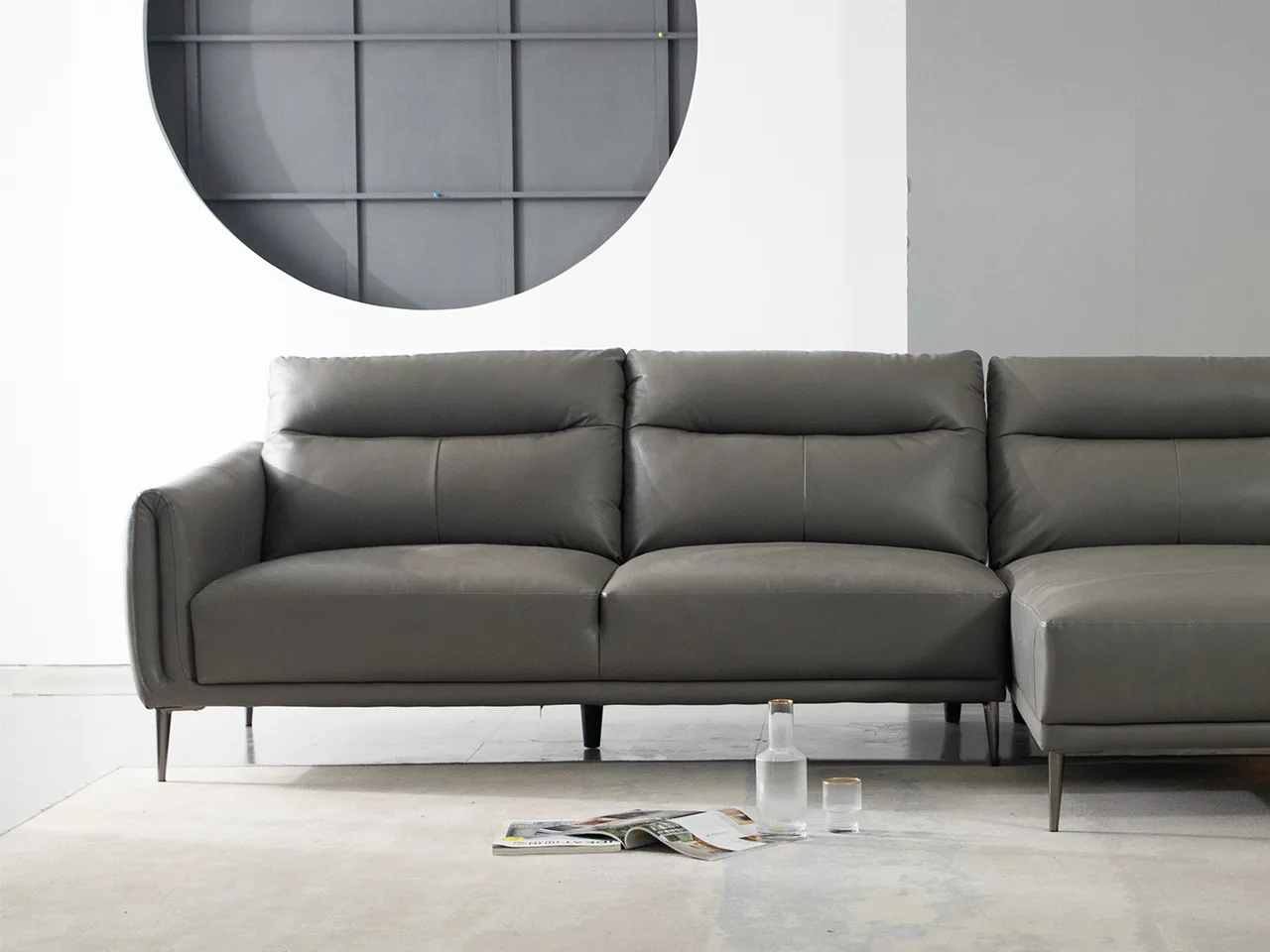
The most important spec on a sofa is the one most buyers never ask about: the density of the seat foam, measured in kg/m³. It is invisible. A 35 kg/m³ cushion and a 28 kg/m³ cushion feel almost identical on a fresh sample. Nine months later one has held its shape and the other has a dip where everyone sits, and your reseller is forwarding you a photo of it.
What the numbers mean
For seat cushions, the useful range starts around 35 kg/m³ for a firm, durable seat and climbs from there. For a sofa in daily use or a contract setting, the guidance from the upholstery trade points to roughly 35 to 50 kg/m³ in high-resilience (HR) foam — the higher end for pieces that get sat in hard, every day. Back cushions can run softer and lighter, because they carry far less load. Resilience matters as much as density: high-resilience foam rebounds toward the higher end of the scale, which is why a good HR seat comes back to shape overnight instead of staying compressed.
We build our recliner seats from around 35 kg/m³ for the value tier up to about 45 kg/m³ high-resilience foam for daily-use and contract pieces. The cheaper foam is genuinely fine for a guest room. It is the wrong call under someone who reclines in the same spot every evening.
Why "high-density" on a spec sheet is not enough
"High-density" is a marketing word, not a number. Density and firmness are different things too — a dense foam can be soft, and a light foam can feel firm for a while before it gives out. The only honest spec is the kg/m³ figure plus, ideally, an ILD/IFD firmness value. That is why our quotes carry the density number rather than an adjective. If a competing quote just says "high-density premium foam," ask them for the kg/m³ and watch what comes back.
Seat, back and the layers in between
A cushion is rarely one block of foam. A good seat is often a denser support core with a softer comfort layer on top, sometimes wrapped in polyester fibre or a feather-down blend for the sink-in feel buyers like. That construction matters for two reasons. First, the support core is what carries the load and decides longevity, so that is the layer where the density number counts most. Second, the soft top layer is what a buyer feels on the showroom sample — which is exactly how a thin comfort layer over a cheap core fools an inexperienced importer. When we quote, we state the core density and the wrap separately so you know which part you are paying for. Back cushions can run softer, often 20-25 kg/m³ or a fibre fill, because nobody sits on the back of a sofa.
The trade-off we put on the table
Cheaper foam lowers your FOB price and your landed cost. For a guest-room sofa or a budget e-commerce SKU that gets light use, 35 kg/m³ is a defensible, cost-effective choice and we will quote it without trying to upsell you. For a daily-use lounge piece or anything going into a hotel or waiting room, we push toward 45 kg/m³ HR and explain the difference in writing — because the cost of replacing sagged cushions under warranty dwarfs the foam saving. Spend the money where the sofa fails, which is the seat.
There is a climate angle too. Foam behaves differently across markets: a cushion specced for a temperate showroom can feel softer in tropical heat and firmer in a cold, dry market. For programmes going into the Gulf or Southeast Asia we tend to hold the density a notch higher so the seat still supports after a few humid months, and we say so rather than shipping the same spec everywhere and hoping.
Foam also feeds into shipping. Denser cushions add a little weight, but with sofas you cube out before you weigh out, so density rarely changes your container math. The cushion construction does interact with the frame and springs, though — soft foam over weak springs sags twice as fast, so we spec the two together.
If you want to check a sample yourself, two things tell you most. Weigh a cushion of known size — density is mass over volume, so a heavier cushion of the same dimensions is the denser one. And sit on the front edge for a few minutes, then look at how fast it recovers; a high-resilience seat springs back, a cheap one stays dented. Neither test replaces the spec sheet, but together they catch the gap between a quoted density and what actually arrives, which is the gap that costs you in returns.
Send us your retail target and how the sofa will be used, and we will recommend a seat density and quote the kg/m³ in writing. We build to BIFMA/EN methods and testing can be arranged. Reach us via the contact form or [email protected], or read how we set up a label run on the OEM/ODM page.