We have watched a sofa cross the Pacific without a scuff and then come back as a claim because two delivery men dragged the carton up a staircase by its straps. Importers spend weeks negotiating the ocean freight and minutes choosing the last-mile tier, and the economics run the other way: the final thirty metres is where the damage, the reviews and a surprising share of the landed cost actually live. We will not redo the container math here — that note exists — this one is about what happens after the box lands in your warehouse.
The four tiers, in plain terms
The US market, which is where most of our e-commerce buyers ship, has settled on four service levels. Curbside: the truck stops, the carton comes off the tailgate, and everything after that — stairs, doors, unpacking — is the customer's problem. Threshold: the carton crosses the first doorway or lands in the garage. Room of choice: it reaches the room, still boxed. White glove: the crew places it, unpacks it, assembles what needs assembling, and takes the debris away. In rough money, curbside runs from tens of dollars up toward a hundred; white glove commonly lands in the $150-300+ band per piece, more with difficult access. Those bands move with fuel and region, but the ratio is stable: white glove costs roughly two to three times curbside.
Why the cheap tier is not always the cheap tier
Curbside makes sense exactly when the product is designed for it: a compact, knock-down sofa in a manageable carton that one or two ordinary adults can move and assemble. That describes a real and growing slice of the market, and for a $600 retail sofa it is the only tier the margin can carry — a $250 white-glove fee on a $600 product is a third of the price gone before anyone sits down.
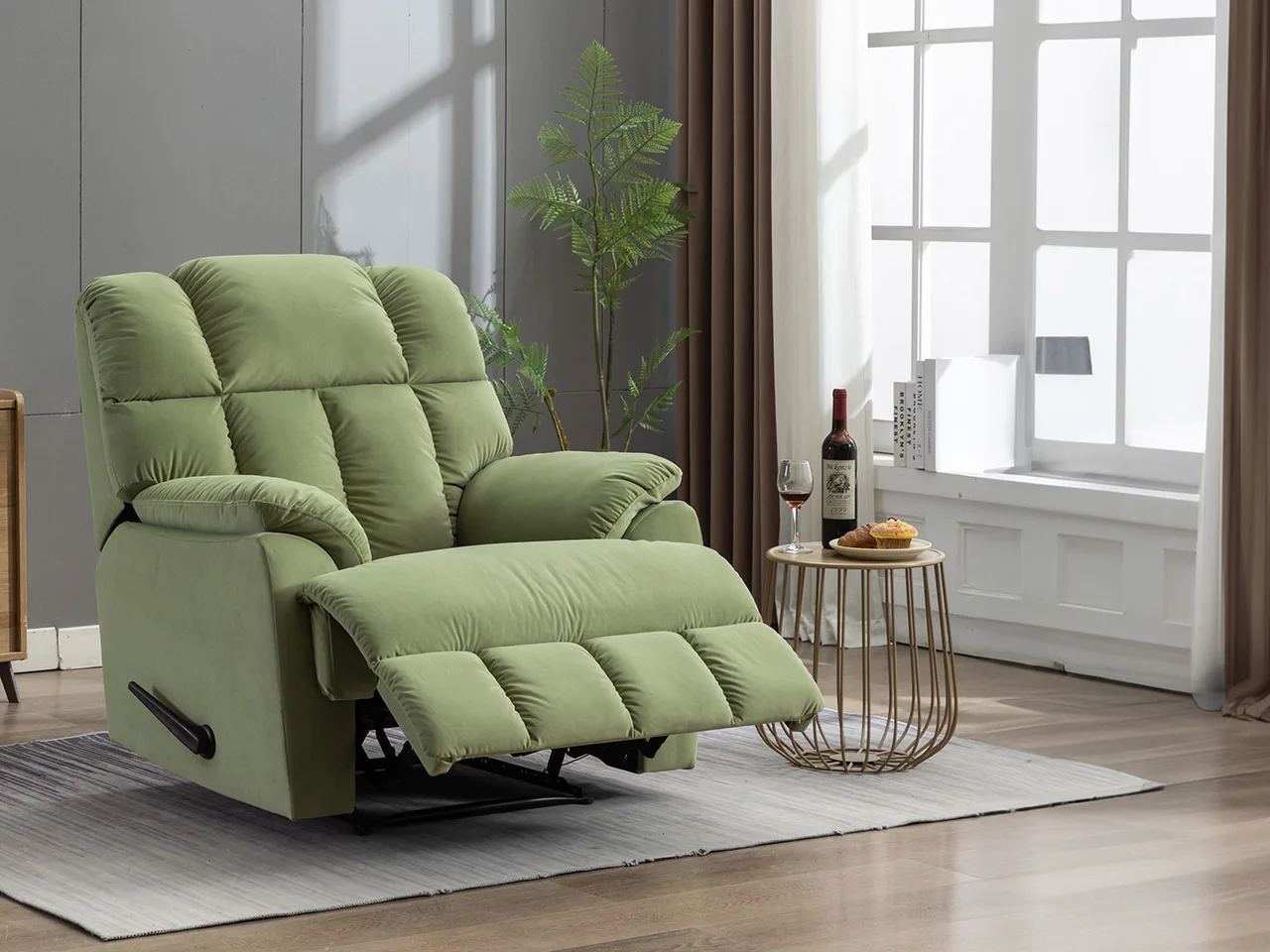
It stops making sense as the piece gets heavy and powered. A three-seat power recliner ships closer to assembled because the mechanism and wiring limit the knock-down, the carton is heavy and awkward, and a customer who cannot move it from the curb refuses delivery or leaves the review that costs you the next forty orders. For powered pieces and large sectionals, white glove is not a luxury upcharge; it is the tier where someone competent carries the weight, connects the power, function-tests the recline and walks away from a working product. The fee is high. The alternative is a return on a 70 kg item, which costs more than the fee every single time.
Damage claims: the paperwork tier
The delivery tier also decides how damage disputes resolve. At curbside, the customer signs (or the driver photographs) at the tailgate, and anything discovered after the carton is opened becomes a concealed-damage argument — those have short claim windows and a low win rate for whoever reports late. With white glove, the piece is unpacked and inspected with the crew standing there, so damage is found, documented and claimed at the door while liability is still attached to the carrier. In our experience that single difference — inspection before the crew leaves — is worth more than the packaging upgrades buyers usually ask us for, and we already spec carton board by edge-crush rather than hope.
What the factory controls from this side of the ocean
The last mile is your contract, not ours, but the factory decides how survivable the product is in whoever's hands carry it. Concretely: carton sized for the tier (a curbside SKU needs handholds and a weight one strong customer plus one reluctant spouse can manage), the mechanism strapped closed and foam-blocked so it arrives quiet, assembly steps that need no tools and no interpretation, and a parts pack taped where it cannot be thrown out with the foam. For white-glove programs we print the function-test steps on the inside flap, because a crew that tests the recline before leaving converts a would-be service call into nothing. All of that is set during the OEM/ODM spec stage, which is the right time to tell us which tier each SKU ships under — we pack a curbside SKU and a white-glove SKU differently even when the sofa inside is identical.
Returns: the number that closes the argument
Run the return math once and the tier choice usually makes itself. A returned boxed sofa needs a carrier pickup at residential rates, survives the trip back in an opened carton at best, and lands in your warehouse as an open-box unit you will resell at a discount if you resell it at all — on a bulky item the all-in cost of one return routinely exceeds the white-glove fee on three or four deliveries. That is why the operators who live on thin furniture margins are ruthless about matching tier to product: they are not buying a delivery service, they are buying a lower return rate. Whatever tier you choose, publish it clearly on the product page; a customer who expected a crew and got a curb writes the review either way, and that expectation gap is free to fix.
The decision, compressed
Match the tier to the product, not to the cheapest line on the rate card. Knock-down, sub-40 kg cartons, value price point: curbside, and design the unboxing for amateurs. Heavy, assembled, powered, premium: white glove, priced into the retail from day one. Threshold and room-of-choice fill the genuine middle. The expensive mistake is shipping a heavy powered sofa curbside to protect a price point — the returns, the one-star reviews and the concealed-damage write-offs quietly cost more than the service gap you saved. We build to BIFMA/EN methods, motor and electrical testing can be arranged, and we will pack to whichever tier your program runs.
Tell us which delivery tiers your SKUs ship under and we will spec cartons, strapping and assembly steps to match — and flag which models we would not send curbside at all. Reach the export desk via the contact form or [email protected].