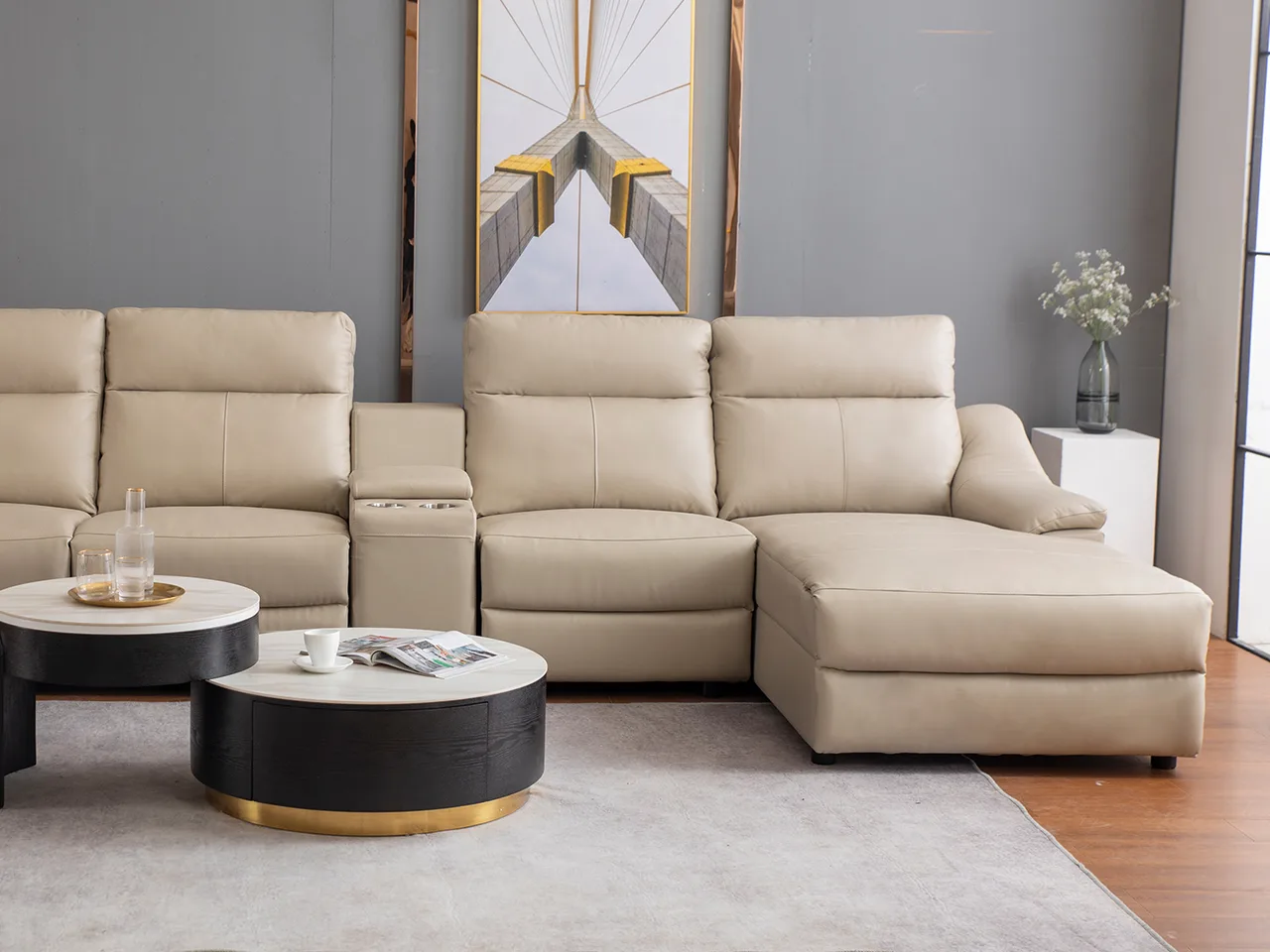
A sofa headed for a hotel lobby, a waiting room or a cinema lives by different rules than the same sofa headed for a living room. Two areas catch importers out: flammability paperwork and, for powered pieces, electrical safety. Get either wrong and the goods can be unsellable in the destination market regardless of how well they are built.
Flammability: smolder, and the contract route
In the United States the reference point most buyers meet is California Technical Bulletin 117-2013. It tests whether the materials in upholstered furniture resist a smoldering ignition — a cigarette-style smolder test rather than the open-flame test the old standard used. Cal TB 117-2013 was adopted into federal law as 16 CFR Part 1640, so it effectively applies to upholstered furniture sold across the US, and goods that comply must carry a permanent label stating it. For genuine contract settings — public buildings, some hospitality — buyers may be asked for an open-flame standard on top of the smolder test, which is a different, harder bar. Tell us the destination and the setting, because "it is for a hotel" changes which test you need.
Power safety: UL 962 for anything that plugs in
The moment a sofa has a motor and a power supply, it is not just furniture — it is a powered product, and North American retailers commonly look for it to meet UL 962, the Standard for Household and Commercial Furnishings, which covers the electrical risk of furnishings. The actuator brands we work with build in the basics — overload protection and a thermal cutoff so the motor does not burn out under continuous use — but the system-level safety claim belongs to a test, not to a sentence on a quote.
How we phrase certification, honestly
This is where we are deliberately careful. We build our functional sofas to BIFMA and EN methods and our powered pieces around actuators with the right protections, and testing to Cal TB 117-2013, an open-flame contract standard, or UL 962 can be arranged through a third-party lab per order. What we will not do is print "certified" on a sofa before your final configuration is in the lab, because the cover, the foam and the fill all affect a flammability result. Built-to and tested-to are different sentences, and only the second one is true once your sample passes.
The label and the paperwork that ship with the goods
Compliance is not only about passing a test; it is about the goods carrying the right evidence. US upholstered furniture under 16 CFR Part 1640 must bear a permanent label stating it complies with the smolder standard — a missing or wrong label can hold a shipment at the border even if the sofa itself would pass. Contract buyers usually also want the test report on file, tied to the specific cover and fill they ordered, because a report for a different fabric is not proof of anything. We keep the label wording and the report scope matched to your actual configuration, and we confirm the destination's labelling rules before production rather than after.
Other markets, briefly
The US smolder rule is the one most buyers meet first, but it is not the only one. The UK has its own, stricter furniture fire regulations; other markets have their own labelling and test regimes. We do not pretend to hold every certificate for every country — that would be the kind of claim this whole article warns against. What we do is build to recognised methods and arrange the specific test your destination requires, then say plainly which standard the report covers.
The trade-off on testing
Testing costs money and calendar time, and for a pure residential order it may be the smolder test and nothing more. For a contract or hospitality order, budget for the extra standards up front and book them at the sample stage, not at shipment — discovering a flammability fail on a representative sample is cheap; discovering it on a loaded container is not. We sequence this into the OEM/ODM workflow so the paperwork is ready when the goods are, and we tie it to the foam and cover spec since both feed the flammability result.
A practical sequence helps here. Confirm the destination and whether the setting is residential or contract; decide the cover and fill, since those drive the result; book the test on a representative sample; then hold production until the report is back. Skipping straight to mass production to save two weeks is the false economy that strands a container at customs over a label. The same discipline around sequencing inspections before shipment is covered in detail in this pre-shipment inspections guide. We would rather lose the fortnight at the sample stage than lose the shipment at the port.
Tell us the destination market and whether the order is residential or contract, and we will map the flammability and power-safety standards you need and the cost of arranging each. Reach the desk at the contact form or [email protected], and see how this sits in our OEM/ODM workflow.